Staircases and hallways are often overlooked when designing a home, yet they can become some of its most beautiful architectural features. Custom stair runners offer a practical and elegant way to transform these spaces, adding warmth, texture, and visual character while complementing the surrounding interior design.
The right stair runner does more than cover steps. Its width, material, colour, pattern, and finishing details can highlight the natural beauty of a staircase and create a seamless connection between different areas of the home. From classic wool textures to contemporary geometric patterns, every design choice contributes to the final result.
At Tapis André Viau, we understand how thoughtful carpet design and precise installation can enhance a home’s architecture. With decades of experience serving Montreal homeowners, designers, and professionals, we help create custom stair runners and flooring solutions that balance craftsmanship, comfort, and timeless elegance.
Custom Stair Runners Can Transform Your Staircase
Staircases naturally attract attention because of their scale and position within a home. In many Montréal residences, they are among the first architectural elements visible from the entrance.
That creates an interesting design opportunity.
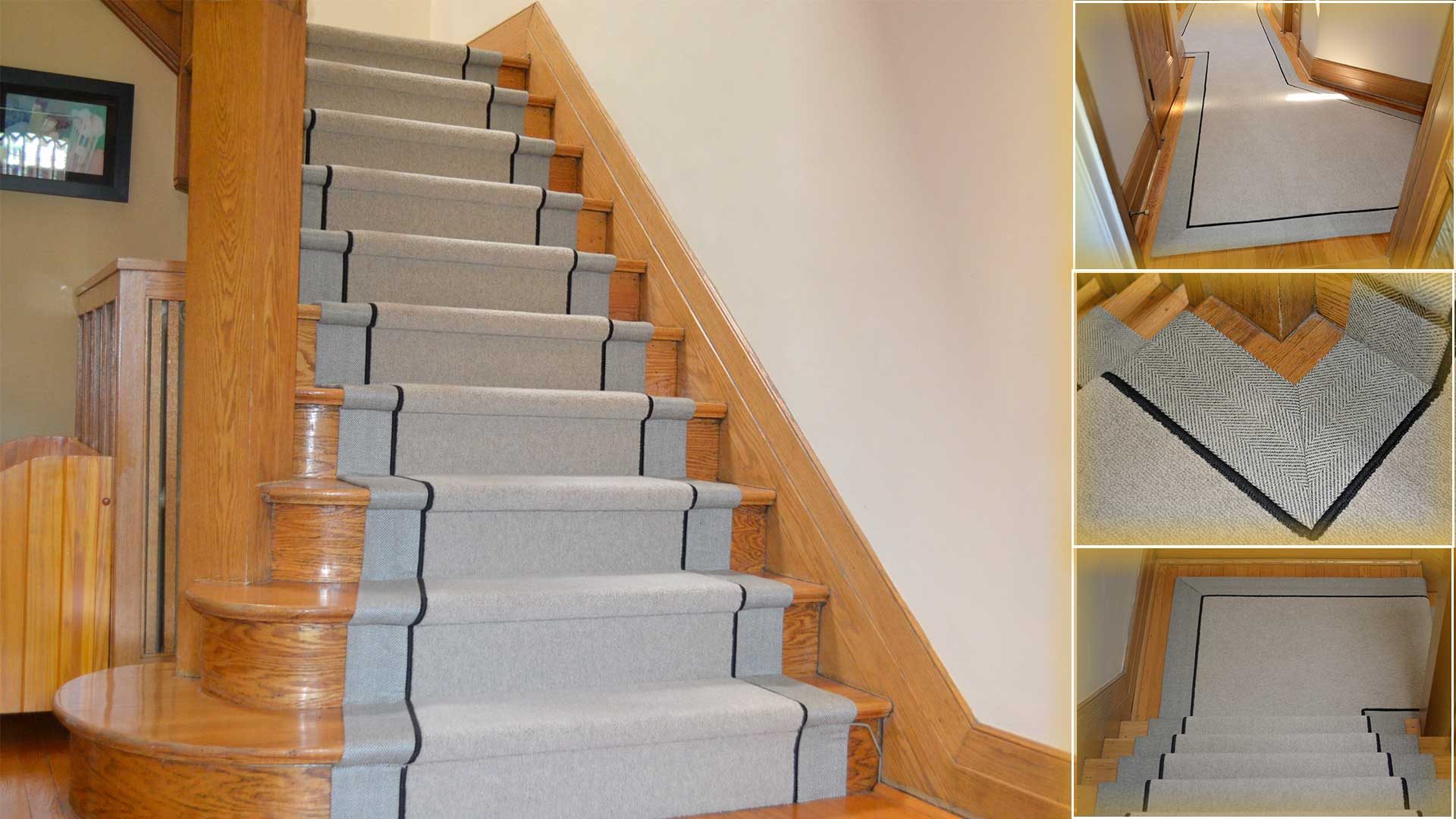
A custom stair runner can introduce colour, pattern, and texture without concealing the craftsmanship of the staircase itself. Leaving carefully calculated portions of wood visible along each side can create contrast and frame the runner beautifully.
The proportions matter.
Too narrow, and the runner may feel disconnected from the staircase. Too wide, and it can overwhelm the architectural details beneath it.
Finding that balance is part measurement, part design judgment. Well-designed custom stair runners balance width, texture, and proportion to complement the staircase without hiding its architectural details.
Design Should Follow the Architecture
There is no single stair runner that works everywhere.
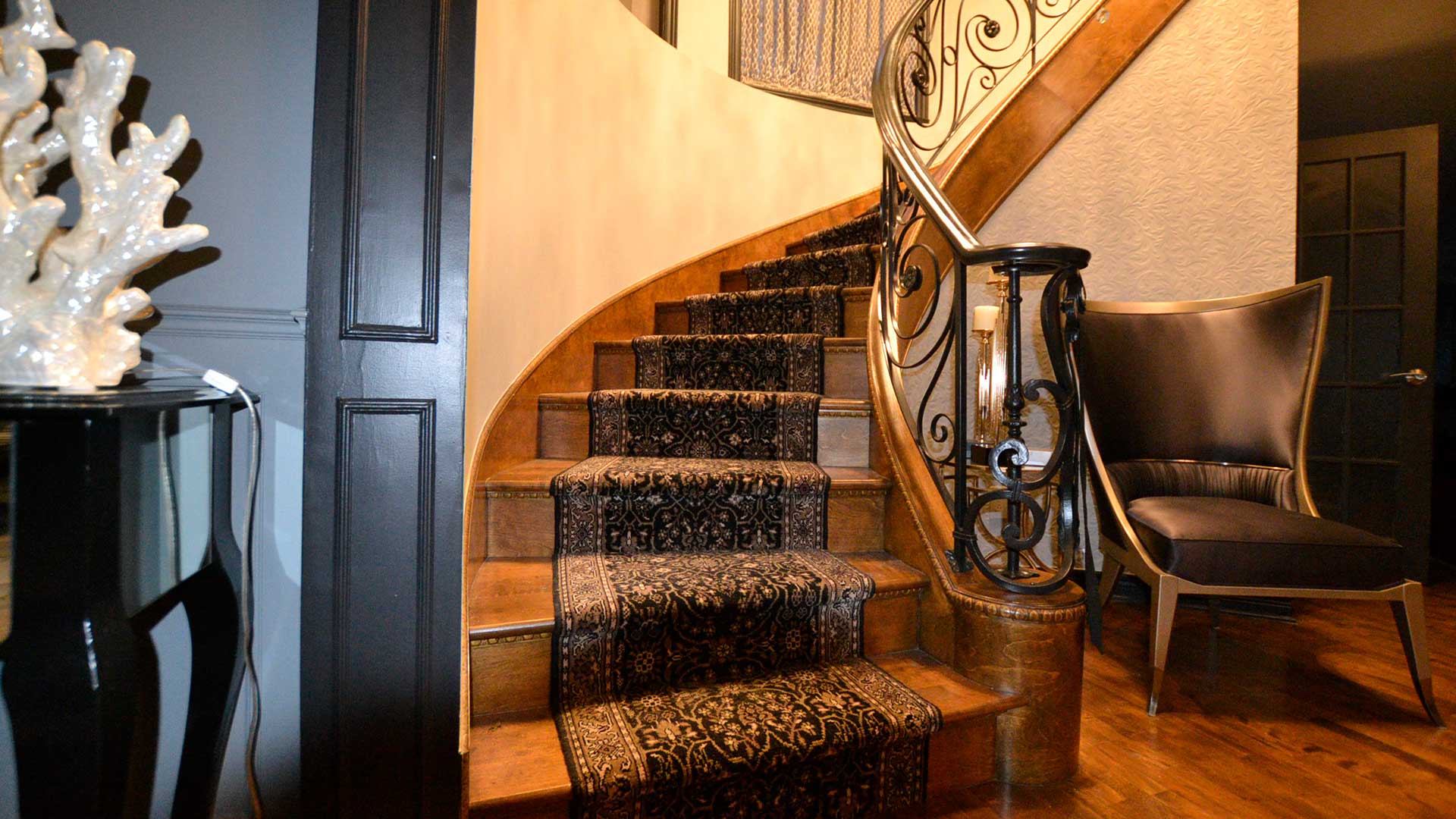
A traditional Montréal residence with detailed woodwork may call for something very different from a minimalist contemporary home with pale oak flooring and clean architectural lines.
Patterns such as chevron, stripes, or subtle geometric designs can create movement and visually lengthen a staircase. A quieter, textured carpet may work better when the surrounding architecture already contains strong decorative elements.
Colour behaves differently too.
A sample viewed horizontally on a table can look surprisingly different once it travels vertically along a staircase. Natural light from an upper-floor window may highlight certain fibres during the afternoon while leaving other sections in shadow.
These small variables are easy to underestimate, but they can significantly influence the finished result.
Why Wool Remains Such a Compelling Choice
Pure wool continues to have a special place in sophisticated residential interiors.
There is an unmistakable depth to its texture. It feels warm and comfortable underfoot, while its natural character works particularly well in spaces where homeowners want elegance without making the interior feel overly formal.
Wool can also contribute to acoustic comfort. Anyone who has lived with an uncovered hardwood staircase knows how easily footsteps travel through a home. Adding a properly installed runner may soften some of that everyday noise, especially in multi-level residences.
That does not mean wool is automatically the correct material for every project. Lifestyle, traffic levels, maintenance expectations, pets, children, and budget should all influence the decision.
The goal is not simply to select the most luxurious material.
It is to select the right material for the way the home is actually lived in. Choosing the right material for custom stair runners means considering foot traffic, maintenance, comfort, and the overall style of the home.
Precision Becomes Especially Important with Patterns
Patterned stair runners can look effortless when they are finished.
Getting them to look effortless is another matter.
Imagine a geometric pattern travelling across ten or fifteen consecutive steps. A small alignment error near the beginning can become increasingly noticeable as the runner continues upward.
The centreline matters. Pattern placement matters. The transition between the tread and riser matters.
Even the way the pattern appears when viewed from the bottom of the staircase needs consideration.
This is where careful measurement and experienced installation become inseparable from design. For patterned custom stair runners, accurate measurements and consistent alignment help create a polished appearance from the first step to the last.
The same principle applies to corridors. Long, narrow spaces naturally exaggerate lines. A pattern that drifts slightly from the architectural centre of the hallway can feel visually uncomfortable, even when someone cannot immediately identify what is wrong.
Good installation eliminates that distraction.
The Details Complete the Story
Edges deserve attention as well.
Serging can provide a subtle, integrated finish. Decorative binding may introduce contrast or connect the carpet with another colour already present in the interior. Depending on the project, cotton finishes, borders, or other customized treatments can give a runner an entirely different personality.
These details may occupy only a few centimetres of the finished carpet, but their visual influence can be surprisingly significant.
This is one reason custom work feels different from simply purchasing a standard runner and adapting it to the space.
The design is considered as a whole. With custom stair runners, edging, binding, colours, and finishing details can be coordinated to create a unified architectural look.
Comfort and Safety Can Be Beautiful
A stair runner also has practical responsibilities.
It can provide additional traction underfoot, soften the impact of footsteps, help reduce noise, and protect portions of the staircase from everyday wear.
For a busy household, these benefits may eventually become just as important as the appearance.
There is no reason functionality needs to look utilitarian, though.
When material, proportion, pattern, finishing, and installation are considered together, practical requirements can become part of the design rather than compromises made afterward.
Turning a Client’s Vision Into Something Real
Every project begins differently.
One homeowner may arrive with an interior designer and a very specific pattern in mind. Another may simply know that the staircase feels unfinished. Someone else might bring a photograph, a fabric sample, or even a colour taken from a favourite piece of furniture.
Our role is to translate those ideas into something that works within the actual architecture.
Since 1957, Tapis André Viau has worked with homeowners, designers, and professionals to create custom carpets, stair runners, wall-to-wall installations, and personalized flooring solutions throughout Montréal.
Because ultimately, a successful custom carpet should not look as though it was added to the architecture afterward.
It should feel as though it was always meant to be there. Beautifully designed custom stair runners should feel like a natural extension of the home’s architecture rather than an accessory added afterward.
A corridor becomes more than a passage. A staircase becomes more than a route between floors. Texture, colour, craftsmanship, and proportion give these overlooked spaces a new presence within the home.
And sometimes, the part of the house designed simply to take you somewhere becomes one of the places you remember most.